This modified excerpt is a part of the Not From Here blog series highlighting sections of undergraduate students’ research. IEHS recognizes the intellectual labor involved in undergraduate research and advising. We invite history majors who have written a senior honors thesis and/or participated in public history projects relevant to the IEHS mission to submit a blog post based on their research.
The bruja is a spiritual figure who emerged during the colonial period in Guatemala and the Spanish Inquisition. Beginning in the 16th century and notably in the 17th and 18th centuries, colonial attempts to control Indigenous peoples led to the development of the bruja figure.1 Brujas are women portrayed as evil, promiscuous, and dangerous witches. The bruja—a gendered and racialized construct—was created because she stands in opposition to Catholic spiritual traditions, has sexual agency, and spiritual power. The bruja is also a proxy for opposition to Catholicism. Her agency and power are viewed as threatening to religious and Spanish, white, male hegemony.
The Inquisition-era construction has survived both space and time, as fear of the bruja still exists in Guatemala and across the Guatemalan diaspora today. Women presumed to be brujas are scapegoated for societal misgivings, chastised, and used to strike fear in the hearts of disobedient children and adults. The Guatemalan bruja has the power to give life and take it away and expresses this power through violence, sexuality, and reproduction. Conversely, the male brujo bears similarity to the bruja as he is condemned for practicing Indigenous, overtly non-Catholic spirituality, but his power lies outside of the realm of sexuality and reproduction. In fact, the male brujo could be considered a desexualized figure. He is powerful for the sake of being powerful, and his sexuality is not a fundamental part of his construction. This essay examines the emergence of the bruja and traces her across the Guatemalan diaspora to understand her origins and the enduring legacy of Spanish colonization.
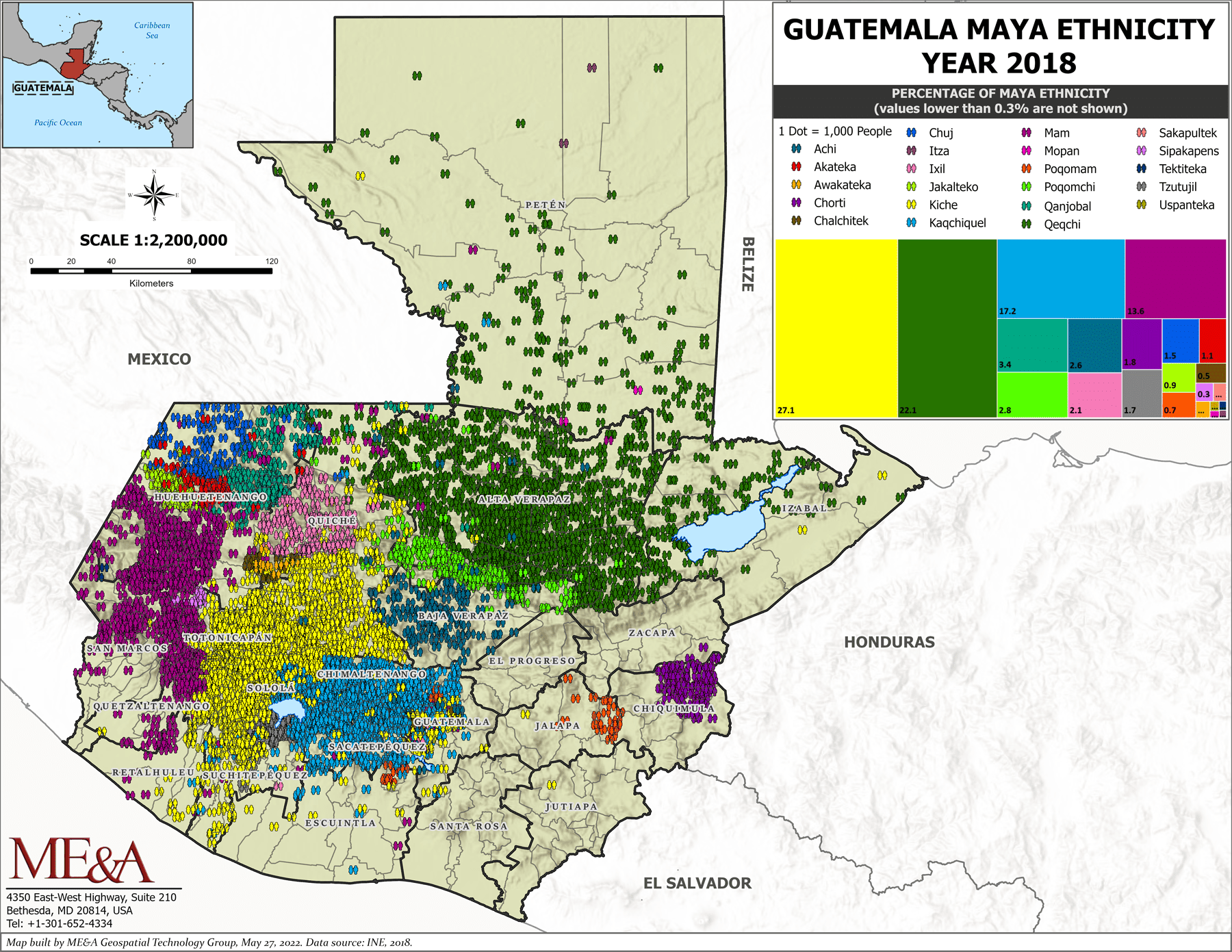
My research on the prevalence of Brujería stories in diasporic communities is based on oral history shared by people who have immigrated to the United States from Guatemala. Three of the interviews were conducted in 2025 with the Lucero family.2 All three family members immigrated to the US from Guatemala in the 1980s. The first is Alonzo Lucero, a male in his 60s, born in Zona 1, Barrio Candelarias, Guatemala, who immigrated to the US in his 20s. The second, Susie Lucero, a female family member in her 60s, was born in Venezuela, immigrated to Guatemala at age 4, and then immigrated to the US in her 20s. The third is Lucia Lucero, a female family member in her 40s who was born in Guatemala and immigrated to the US when she was 4-5 years old.
Alonzo recalled brujas being known for using cigars to heal or to cast spells, echoing the same tales documented in Few’s account of witchcraft in Inquisition-era Guatemala. Women who practiced this type of magic would provide cigars to their clients that were meant to cast a spell and give their clients herbs and amulets. They would then provide instructions on how to utilize these items in order to make the spell effective. If the client followed the bruja’s instructions, the client’s wishes would be granted. According to Alonzo, in modern Guatemala, cigars could be used to cure alcoholism and to create love spells. Alonzo specifically noted that love spells were used by women with unrequited affection towards a man, emphasizing that brujería was a form of feminine power over men. Mayan ritual cigar use existed in Central America before Spanish colonization.3 One Maya folktale “depicts Moon as the mother of tobacco, which is conceived as the original medicine and intoxicant. With her transformation via the intoxication of sex, she becomes honey, and with the intoxication of honey, she becomes balche [a ritual beverage].”4
Another method of brujería that was a significant part of Alonzo’s interview was the entierro, which he at first refused to elaborate on. I will refer to this spell as the “other woman spell,” as all three Lucero family members had different perspectives on this spell and the ways it has become a part of their family folklore. The story goes that a male family member, Luis, who passed away in 2017, was the recipient of this “other woman spell.” Luis was from Guatemala, and met his first wife, Rosa, who was originally from Venezuela, on a military trip. Luis and Rosa had four children and settled in Guatemala. He returned to Venezuela alone. His return to Venezuela is when he started an affair and created a second family with the “other woman,” who will be referred to as Alondra.
All three family members spoke about this spell in a manner that reflected Inquisition-era tales of brujería. Lucia, in her interview, described a spell cast upon Luis to explain why he had two different families. According to Lucia, Luis was married to both women—one in Guatemala and the other in Venezuela. In her recollection, not only was the “other woman’s” brujería used against Luis, but the spell was also a curse that extended to the entire Lucero family after he left Alondra in Venezuela alone with their children. Challenges the Lucero family has faced, such as mental illness, substance abuse, and poverty, are blamed on Alondra, the “bruja” who created the curse. The struggle the family has encountered as immigrants is said to be rooted in the negative energy and powerful spells of one woman, one bruja.
Lucia also understood that the misfortunes of her family are not a curse, but rather the result of a “product of where you’re coming from”—a product of the hardships inherent in immigrating to the US. It is possible that Lucia’s experience of coming to the US at a young age led her to be more skeptical of the curse’s validity. However, Lucia also argued that brujería is something she does not want to “mess with.” She also believed witches and practitioners of non-traditional spirituality were women in Latino culture. She would not feel comfortable going to psychics or brujas from her own Guatemalan—and Latino—culture. She only felt safe going to were white American witches and psychics, because Latina brujas were too powerful.
There is complexity to how the bruja figure is viewed today. Brujería is found across Latin America and in various modern cultural productions. Modern diasporic conceptions of brujería hold tensions between adherence to colonial norms and resistance and critique of these norms. While Guatemalan immigrants across the diaspora whom I interviewed had negative associations with brujería and non-Christian spirituality, popular Guatemalan literature also celebrates stories that champion those labeled as brujo/as and critique colonialism and the Inquisition.
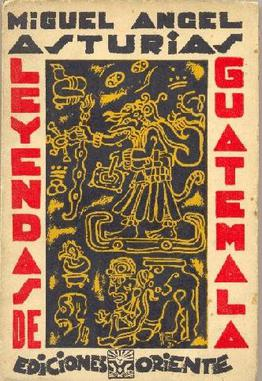
A relevant cultural production related to brujería is Leyendas de Guatemala by Miguel Ángel Asturias—a prominent Guatemalan author and recipient of the Nobel Prize. Leyendas de Guatemala, originally published in 1930, is a collection of Guatemalan and Maya folktales that had been passed down orally. Colonialism, the marginalization of women, Indigeneity, and spirituality are common themes that appear in tales such as “La Leyenda de Tatuana.” This particular story includes direct references to the Inquisition, witchcraft, and the subjugation of Indigenous spirituality.5
The story critiques the literal demonization of spirituality that falls outside of Catholicism. The expression of spirituality and connection between the priest and La Tatuana is portrayed as pure and of good nature, while the colonial officials are among the story’s main villains. Maestro Almendro, an Indigenous spiritual leader, is portrayed as a moral figure, in contrast to the wicked Inquisition. The villains in the story are those who are capitalists, who buy and sell that which should never be sold, and the colonial officials who seek to punish Indigenous people of color. It also calls back to themes prevalent in other sources on Guatemalan conceptions of sorcery, noting the suffering that comes when “that which should not be sold” is sold. La Tatuana represents maligned women who liberate themselves from oppressive circumstances that rip their agency away. But La Tatuana is also portrayed as a sexualized figure, whose value to the merchant is based entirely on her naked physical appearance.

Another cultural production that has thematic connections to brujería is The Brief Wondrous Life of Oscar Wao. The novel centers on a Dominican immigrant family that is cursed, similar to the Lucero family. Fúku, the curse placed on the family in the novel, is so powerful that it has endured across their diasporic experience.6 Fúku has parallels to brujería in that it may be used as an explanation for the experience of living under authoritarian rule; fúku and brujería use the fantastic to explain the oppressive circumstances that immigrants may experience, not only if their home countries are going through turmoil, but also the hardship of being a Latino immigrant in the US. Scholars have argued that the Guatemalan immigrant experience and the trauma that comes from it can be connected to witchcraft stories, as “witchcraft beliefs play a key role in local post-war discussions of trauma and causality.”7
The oral history from the Lucero family and the modern brujería folktales shed light on how the figure of bruja serves as a way to explain and descrie circumstances caused by racial, gender, and socio-economic inequality. Brujería, when used to explain family struggles, is an attempt to gain control over the narrative. The Lucero family’s placement of blame on an “evil woman” shows the difficulty of grappling with traumatic histories of genocide, displacement, immigration, and systemic inequalities in both Guatemala and the US. Using the fantastical to explain a legacy of struggle is a way to regain control over an uncontrollable situation. At the same time, blaming a single mala bruja overlooks their root causes—as hinted by Lucia’s own understanding of brujería.
It is significant that these oral histories of malas brujas from the 21st century mirror and echo the history of the Inquisition. Not only have these tales endured over time, but they have also made their way across the diaspora. Brujería, brujos, and brujas are significant in Guatemalan culture and are emblematic of the importance of storytelling with purpose.
- While the Inquisition was established in 1500s in Guatemala, Martha Few’s book, Women Who Live Evil Lives: Gender, Religion, and the Politics of Power in Colonial Guatemala, which is significant to this essay, focuses on 17th and 18th century brujería. ↩︎
- All names are anonymized. ↩︎
- Jennifer A. Loughmiller-Cardinal and Keith Eppich, “Introduction: Breath and Smoke,” in Breath and Smoke: Tobacco Use Among the Maya, ed. Jennifer A. Loughmiller-Cardinal and Keith Eppich, (University of New Mexico Press, 2019), 6. ↩︎
- Martin Pickands, “The Intoxicating Lady: Tobacco and the Nature of the Moon Goddess,” in Breath and Smoke: Tobacco Use Among the Maya, ed. Jennifer A. Loughmiller-Cardinal and Keith Eppich, (University of New Mexico Press, 2019), 33-34. ↩︎
- Maya priest named Maestro Almendro [Almond tree] gives his soul to four paths. There is a black path, a red path, a green path, and a white path. The black path trades Maestro Almendro’s soul to the Merchant of Priceless Jewels in exchange for some rest. Later on, the Merchant uses Maestro Almendro’s soul to purchase the “most beautiful slave girl,” La Tatuana. Despite Maestro Almendro’s efforts to get his soul back, the Merchant was set on obtaining the enslaved woman and thus refused to return his soul. Maestro Almendro goes insane. One day, the Merchant is swept away and killed in a storm, and La Tatuana survives. Alone now, while wandering, Maestro Almendro comes upon La Tatuana, and they have a spiritual connection. Suddenly, this moment is interrupted when the Inquisition notices their magical, spiritual connection. They were charged and sentenced to death for witchcraft and being possessed by demons. On the night of their execution, Maestro Almendro draws a small boat on her arm and tells her to close her eyes and enter the boat, allowing her to escape. In the morning, all the Inquisitors could find in their cell was an Almond tree. ↩︎
- Fremio Sepulveda, “Coding the Immigrant Experience: Race, Gender and the Figure of the Dictator in Junot Diaz’s Oscar Wao,” Journal of Caribbean Literature 7, no. 2 (Spring 2013): 22. ↩︎
- Daniel Rothenberg, “The Panic of the Robaniños: Gringo Organ Stealers, Narratives of Mistrust, and the Guatemalan Political Imagination” (PhD diss., University of Chicago, 2018), 77. ↩︎