Migration historians have frequently analyzed the “sending state” as a unified entity—either passively hemorrhaging population or actively encouraging export-labor models. This framing makes a certain intuitive sense: states that send workers abroad often do so because they lack the capacity or political will to retain them. Yet this view flattens what is, in practice, a far messier reality. Sending states often contain domestic interests that want to slow or stop emigration—employers who need local labor, nationalists who decry the loss of population, or state-builders who see emigration as a drain on human capital. This drive to retain nationals is rarely unanimous. Sending states contain factions with competing claims, and those factions lobby, negotiate, and sometimes capture state machinery to bend migratory flows in their favor. To understand migration policy in the sending state, we must spotlight those frictions.
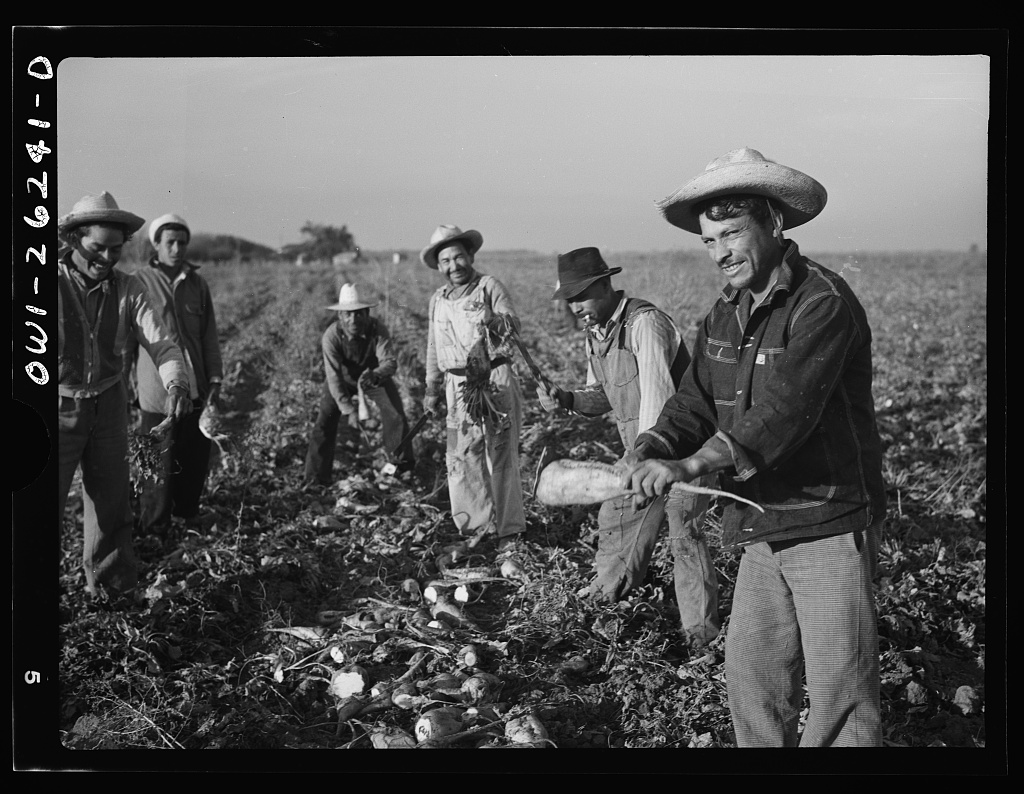
Mexico during the Bracero era offers a revealing case. The Bracero Program, a bilateral guest-worker agreement between Mexico and the United States, operated from 1942 to 1964 and channeled millions of Mexican laborers to American farms. The program is typically studied from the vantage of the receiving state, with historians examining how U.S. agribusiness interests lobbied Washington to maintain access to cheap, vulnerable labor. Far less attention has been paid to the parallel dynamics within Mexico—where domestic agricultural interests waged their own campaign to capture migratory flows for local benefit.
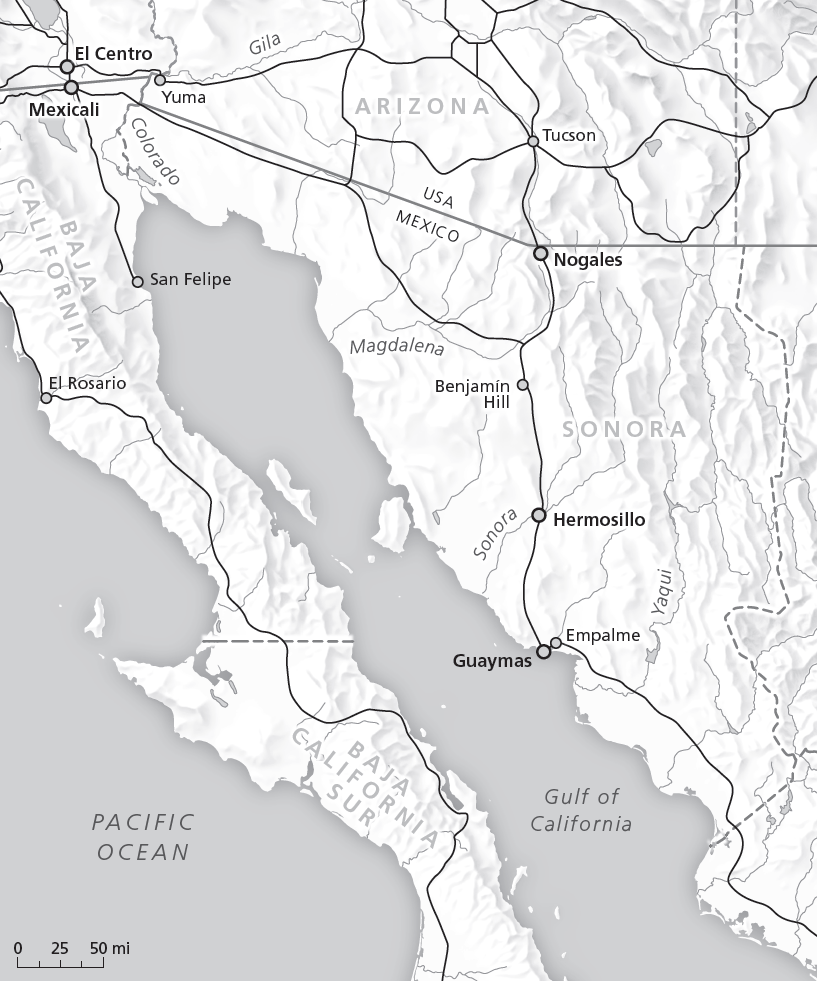
Northern Mexican cotton growers, based primarily in Baja California, Sonora, and Tamaulipas, viewed the Bracero Program and the accompanying undocumented migration as a direct threat to their economic interests. The program drained their region of the labor required for their own harvest seasons. Every campesino who crossed into Texas or California was one fewer hand available to pick Mexican cotton. These growers did not accept this state of affairs passively. They lobbied the federal government aggressively, seeking to alter migratory flows in their favor.
Their opportunity came in 1954, when the bilateral Bracero agreement lapsed. Mexico had grown reluctant to renew the accord. Reports of migrant abuse in the U.S.—wage theft, unsafe working conditions, and violent mistreatment—had generated domestic outcry, and Mexican officials balked at signing an agreement that seemed to sanction the exploitation of their nationals. The diplomatic standoff created a vacuum, and northern growers moved to fill it. They saw the crisis not as a problem but as an opportunity to retain labor internally.
Cotton growers lobbied President Adolfo Ruiz Cortines to stop the exodus entirely, arguing that allowing Mexicans to pass through the north to work in the U.S. crippled their “vital” economic sector by creating artificial labor shortages and driving up wages. They channeled their demands through a consolidated organization called the Asociación Nacional de Cosecheros (ANC), which represented 620 local and regional associations. The ANC delivered a white paper to President Cortines arguing that retaining laborers would not only solve their labor shortage but also boost the national economy by keeping “consumer power” within Mexico to support domestic industrialization. They proposed that the federal government forcefully stanch the migratory flow, believing that if the U.S. border were closed, migrants would be compelled to settle for work in northern Mexico. The ANC even offered to cede some of their commercial fields to the federal government for non-seasonal activities like livestock and poultry farming, hoping this would “root” campesinos to the land and stop them from migrating altogether. During the 1954 crisis, the government sided with this nationalistic sentiment, launching the “Braceros of Mexico for the Fields of Mexico” campaign and deploying the military to block exits—an approach the growers broadly supported.
The diplomatic standoff eventually ended, and the Bracero Program was reinstated after strong arming by the U.S. But northern growers refused to return to the status quo. They had come close to tasting what was possible when the state prioritized domestic labor needs, and they wanted to institutionalize that arrangement. Aided significantly by Sonora Governor Álvaro Obregón Tapia, son of the former president, they pitched a new program to President Ruiz Cortines: a system that used U.S. work contracts as bait to secure labor for Mexican fields first.
The resulting arrangement, the Internal Bracero Program, promised migrants expedited processing for a U.S. contract if they first worked a stint in northern Mexico’s cotton fields. Migrants were required to harvest 2,000 kilos of cotton or work for 21 days in Sonora, Baja California, or Tamaulipas. Upon completion, growers provided them with a letter that theoretically guaranteed priority status on federal waiting lists to cross into the U.S. The program operated through a complex collaboration between the state and private enterprise. The federal government established a massive contracting hub in Empalme, Sonora, which served as a holding center for migrants awaiting both internal and international assignment. Growers formed Mixed Commissions for Labor Control, grower-led bodies responsible for picking up migrants from federal custody at Empalme, transporting them to private depots near the fields, and returning them to Empalme once their quota was met. The logistics were funded by a tax on cotton sales, with large cotton gin operators—often U.S. conglomerates like Anderson, Clayton & Co.—fronting these payments to ensure the system had immediate liquidity.

Here, then, was a case of policy capture by domestic special interests within the sending state. Northern growers had successfully lobbied Mexico City to harness the migratory machinery for their benefit. The state became their labor broker, delivering workers to their fields and using the promise of U.S. contracts as the inducement. The parallels to the receiving state are striking. Just as U.S. agribusinesses lobbied Washington to maintain the Bracero Program, Mexican cotton growers lobbied their own government to create a domestic corollary. Both sets of businesses relied on the state to enforce a system where the laborer was vulnerable: in the U.S., the threat was deportation; in Mexico, the threat was being denied a U.S. contract. In both cases, special interests shaped policy to commodify migrants.
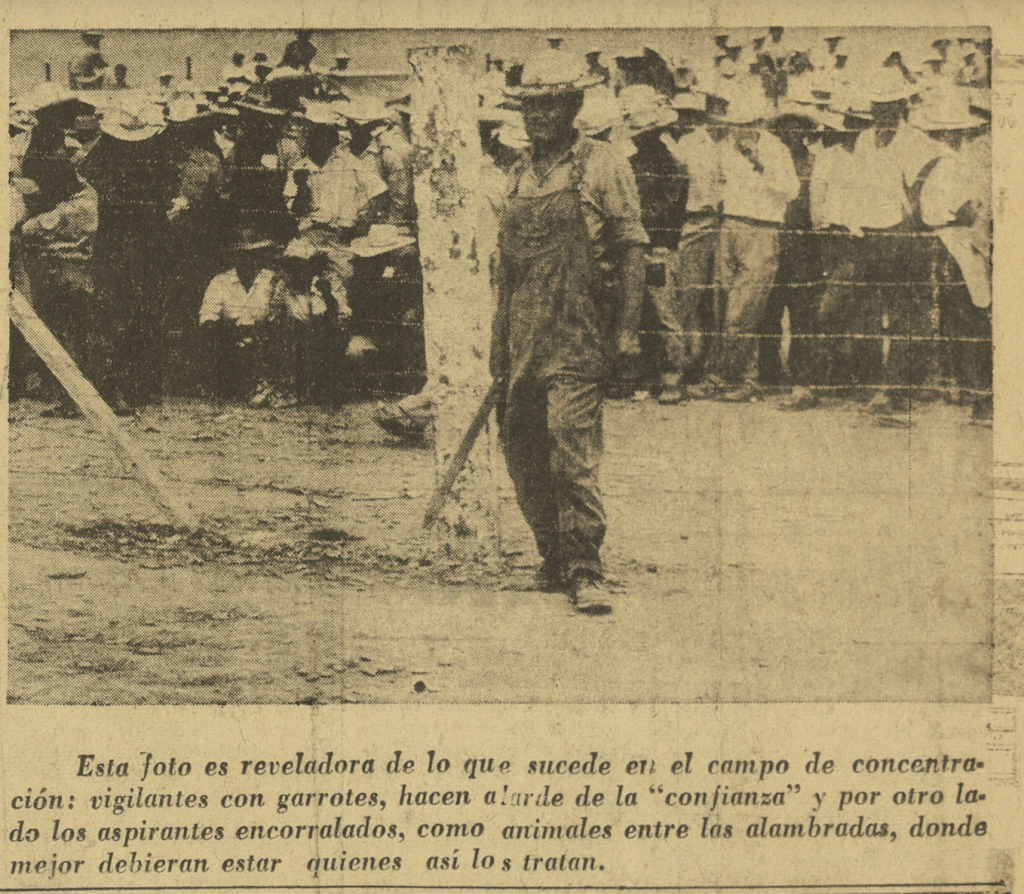
The key difference lies in the sustainability of that capture. In the U.S., agribusiness influence remained robust for decades. In Mexico, the state eventually retreated from the arrangement. Despite being an economic boon that helped make Mexico a world leader in cotton production by the late 1950s, the Internal Bracero Program was terminated in the early 1960s due to administrative failure, corruption, and bad press. The federal processing center in Empalme was a disaster. It lacked sanitation, food, and shelter, leading to disease outbreaks and destitution among migrants stranded there while waiting for U.S. contracts. Officials ran extortion rackets, demanding bribes from migrants to skip the line regardless of whether they had picked cotton, which incited protests. While growers initially managed their end reasonably well, scandals eventually emerged. In 1960, a health inspection of a grower-run depot in Hermosillo revealed horrific sanitary conditions, with migrants sleeping under trees and lacking latrines. This gave the federal government the pretext it needed to cancel the program. President Adolfo López Mateos eventually told growers they had to solve their labor problems without referencing the U.S. Bracero Program, effectively decoupling the two systems and removing the bait that had enticed workers northward.
The Mexican government proved administratively ill-prepared to manage the complex logistics of housing and rotating thousands of workers. But it was also highly sensitive to its image as the guardian of the peasantry. When the Internal Bracero Program generated too much scandal—corruption, headlines decrying Empalme as the “tomb of national dignity”—the authoritarian PRI regime prioritized its political legitimacy and severed the arrangement. U.S. policy, by contrast, tended to weather such humanitarian critiques for longer periods to satisfy economic demands. By 1962, Mexican growers were left to fend for themselves, forced to turn to mechanization and to recruiting whole families because the state refused to continue acting as their labor broker.
The Mexican case suggests that sending states are not monoliths. They contain factions with competing claims on migratory labor, and those factions can capture state machinery—at least temporarily—to redirect human flows. The analytical payoff of this shift in focus is significant. It moves us beyond a simple dyad of sending and receiving states, each with coherent interests, toward a more textured understanding of the political economy of migration. The frictions within the sending state shaped policy just as surely as the pressures exerted by the receiving state. To understand why people move, we must understand who, within their home country, wanted them to stay—and what they were willing to do to make that happen.