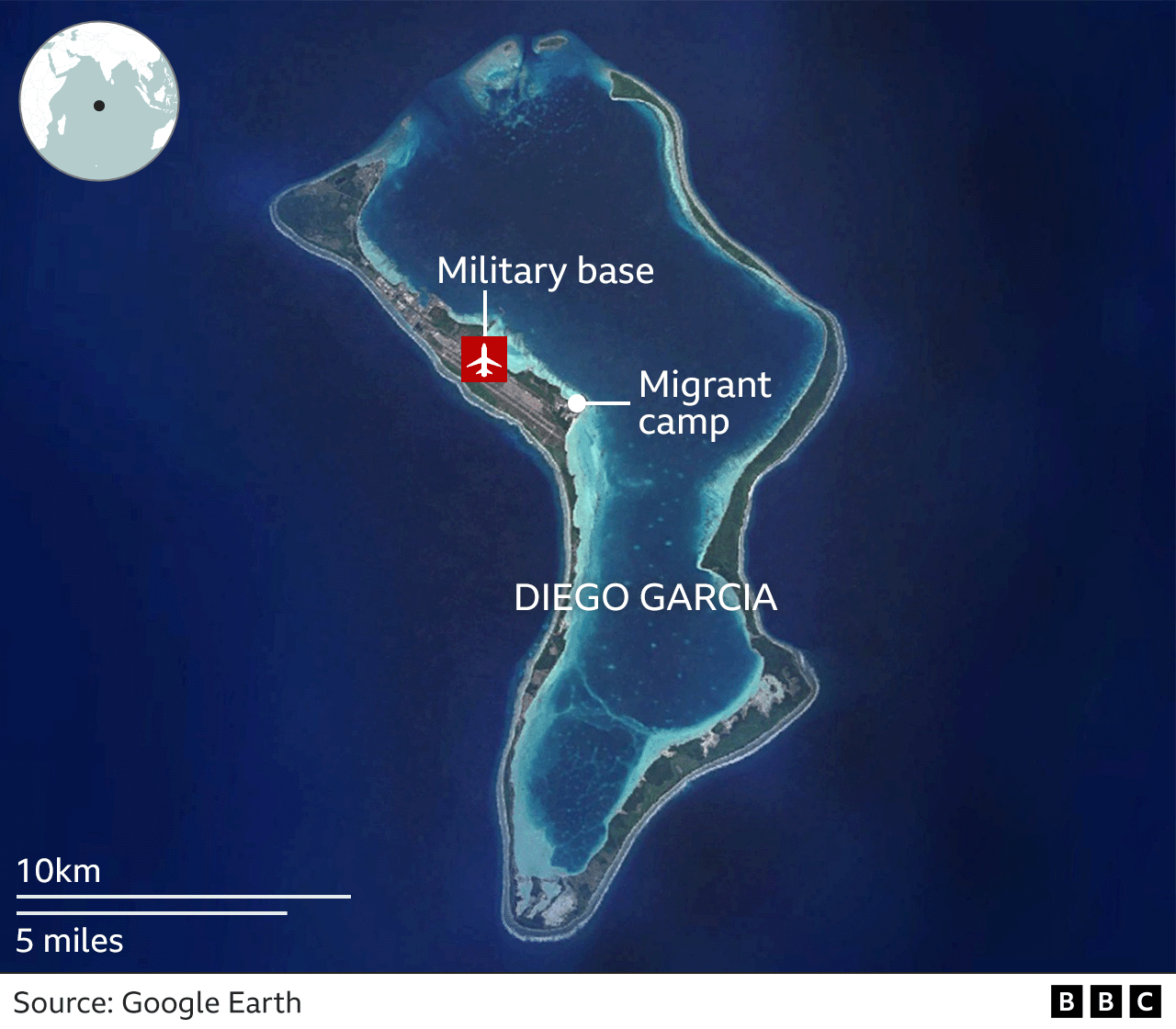
The island of Diego Garcia is difficult place to get to know. This is in part a function of geography. The island sits close to the centre of the Indian Ocean, nearly 2,000km away from neighbouring Mauritius, making it a far journey for anyone who might seek to visit. Much of the island’s history is also vague and tentative, down even to how it received its name. It is thought to have been named after either a ship’s captain or navigator when discovered by Portuguese explorers in the 16th century, but the exact provenance remains unconfirmed. The key factor as to why Diego Garcia remains a place shrouded in secrecy, however, is because the American military designed it to be that way.
The island of Diego Garcia is one in a chain of islands that forms the Chagos Archipelago (which itself has a curious name, and “appears to come from the Portuguese chagas – the wounds of Christ”).1 Over two and a half centuries after Diego Garcia was discovered and named by the Portuguese, it was settled by Franco-Mauritians who used the island as a location for coconut plantations, worked by enslaved labourers brought from Africa. A few decades later, Britain assumed control over Mauritius and its ‘lesser dependencies’, inclusive of the Chagos islands. Over generations the people that laboured on the coconut plantations, eventually known as the Chagossians, developed their own distinct Creole language and unique cultural traditions. They are recognized by the United Nations as an Indigenous group.
Slavery was abolished and living conditions across the Chagos Archipelago steadily improved. While challenges persisted, including low wages and gruelling work on the plantations, many Chagossians spoke of life on this archipelago as ‘paradise’.2 This life ended abruptly in the 1960s, when the United States turned their attention to the island of Diego Garcia as a ideal location to build a military base. The US government was rapidly expanding their military presence across the globe. By the end of World War II, the United States was “building base facilities at an average rate of 112 a month”.3 Diego Garcia was singled out as a particularly desirable location for a new American military facility, strategically located between the Red Sea and the South China Sea. The shape of the island meant there was space for an airfield and a large protected lagoon that could offer a sheltered space for anchorage.
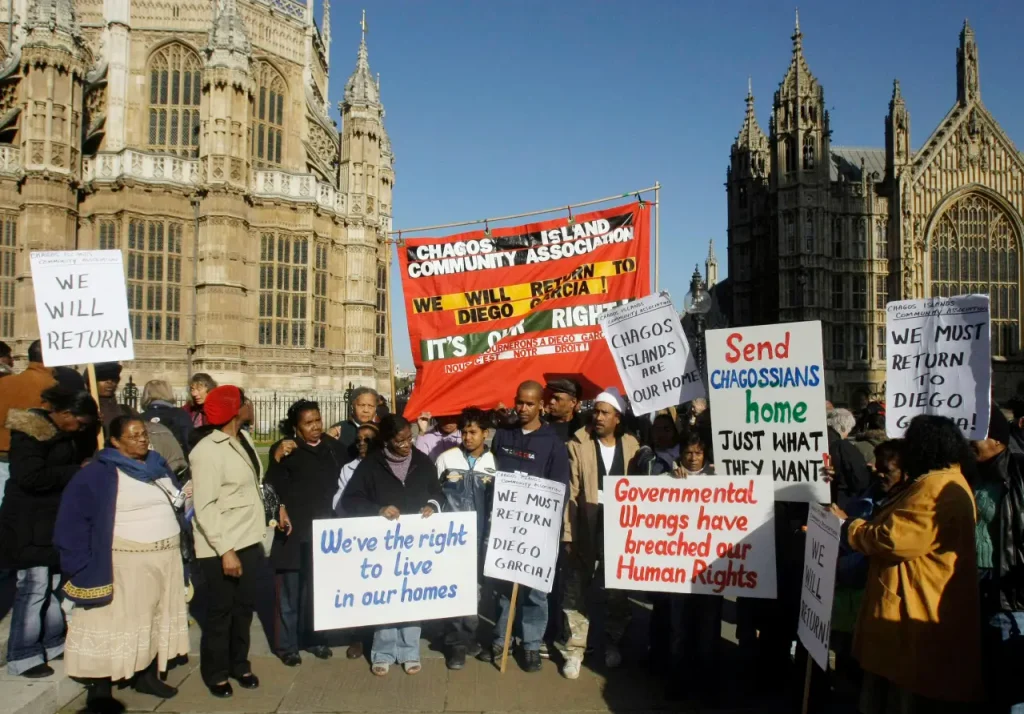
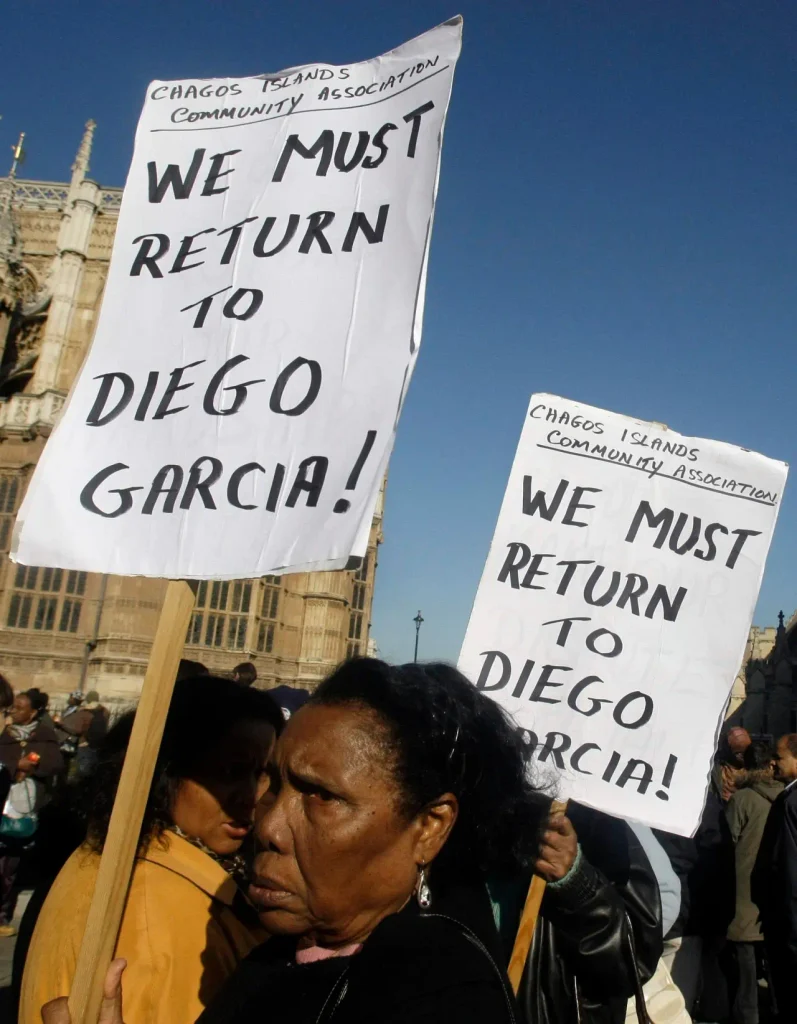
Diego Garcia was also a prime candidate because the Chagossian population was small. As such, the islanders could be framed as a temporary workers, there to labour on the plantations, and not a permanently settled Indigenous population.4 By framing the Chagossians in this way, the UK and US set about removing the Indigenous population, deporting them to Mauritius and the Seychelles, thereby allowing the American military to construct a military base that could operate in almost complete secrecy and would fit their bill of entailing “the least political headaches”.5 The UK agreed to having an American military base on their sovereign territory to strengthen their alliance with the US and saw it this as a viable way to maintain some presence in the Indian Ocean while shifting the costs to the Americans.
The construction of the military base caused an incredible shift. The Chagossians were removed in brutal and cruel ways, with harrowing stories of families being separated and supplies to the islands being heavily restricted to starve people out.6 By 1973, the archipelago had been completely cleared of its Indigenous inhabitants. By mid-1975, an estimated 1 in 40 Chagossians who had ended up in Mauritius had died of starvation or disease. Human Rights Watch has described this expulsion as a crime against humanity and released a report in 2023, 50 years after the last of the Chagossians were forcibly removed from their islands, detailing how the Chagossians and their descendants continue to suffer “a continuing colonial crime”.
The scheme to open the military base required a manipulation of not only the nature of the Chagossians as ‘temporary workers’, but also a clandestine move to detach the Chagos Islands from Mauritius. At the time that the Indigenous islanders were being deported, the world was going through a wave of decolonization, in part governed by the United Nations’ General Assembly Resolution 1514. This resolution specifically stated: ‘any attempt aimed at the partial or total disruption of the national unity and the territorial integrity of a country is incompatible with the purposes and principles of the Charter of the United Nations’. Mauritius was on the cusp of becoming independent from the UK. In order to preserve their control over Diego Garcia, the UK quietly combined the Chagos Islands and several islands that were previously part of the Seychelles to create an entirely new colony: the British Indian Ocean Territory (BIOT).
Since the creation of the BIOT and the completion of the military base on Diego Garcia, several other stories of forcible mobility have unfolded. It is confirmed that in 2008 at least two separate rendition flights landed on Diego Garcia, and additional credible claims allege that Diego Garcia was used as a detention site for ‘high value detainees’ throughout the War on Terror.
The military base relies on migrant labour, with a significant portion hailing from the Philippines. A wage dispute unfolded on the island after Kellogg Brown & Root (one of the largest U.S. defense contractors) failed to uphold a minimum wage requirement set by the Philippine Overseas Employment Administration. While the dispute went on, the Government of the Philippines alleged that Kellogg Brown & Root cancelled the regular charter flights that would normally operate, allowing Filipinos to travel to and from Diego Garcia (as there are no commercial flights). As such, migrant workers were forcibly immobilized, unable to freely leave Diego Garcia.
While this labour dispute was ongoing, other migrants arrived unexpectedly to Diego Garcia. A boat of Tamil asylum-seekers, attempting to make their way to Canada, were rescued at sea and brought to the nearest land – Diego Garcia. The arrival of asylum seekers presented a thorny problem for the UK, who was actively pursuing hardline anti-migration legislation back home, and for the US, who did not welcome unexpected outsiders arriving to their secretive military base. The migrants were housed in tents in a fenced in-encampment, in conditions described as prison-like, where they remained for years. Finally, in late 2024, they were transferred to the UK to have their asylum claims adjudicated. Judges in the UK have repeatedly upheld the finding that the conditions the Tamils were subjected to on Diego Garcia amounts to unlawful detainment.
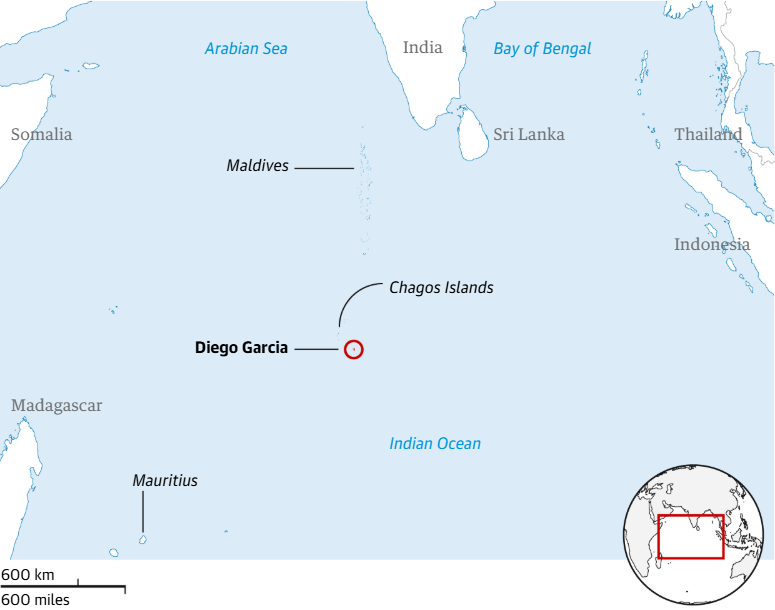
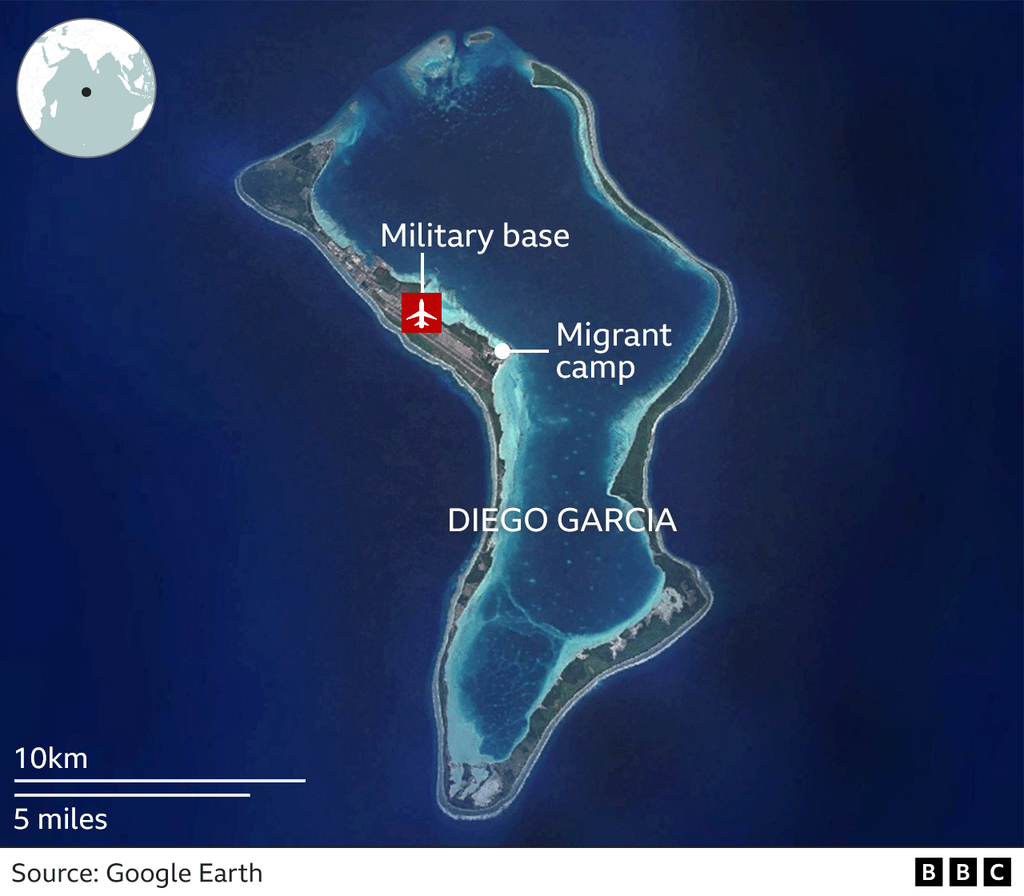
These stories are each a kind of forcible migration. People are moved on and off the island with difficulty, ranging from brutal forcible removals (ie in the case of the Chagossians), or prevented from leaving (such as Filipino workers). Across all instances there are concerning violations of humans rights.
Supported by a Digital History Seed Grant from the Immigration and Ethnic History Society, I am gathering data to create a digital archive of Diego Garcia. The intention of this archive is to make the island of Diego Garcia more ‘knowable’ to a general public. To create this archive, I am conducting oral histories and running participatory mapmaking sessions. By providing a digital repository of oral histories, this project seeks to expand scholarly and public understandings of the island and preserve stories from the generations who lived on Diego Garcia (and other islands in the archipelago) before they are lost. Participatory mapmaking sessions will generate creative maps that will provide deeper understanding of what life was like for Chagossians, for Tamil asylum-seekers, and for others who spent time (by choice or by force) on the island of Diego Garcia. This work is grounded in the idea that the identity of a place is shaped by the stories that are told about it.
As a deal between the UK and Mauritius to return the Chagos Islands back to Mauritian sovereign control crumbles, and Diego Garcia routinely appears in the news cycle related to the ongoing war between the US and Israel against Iran, this project seeks to contribute to public understandings of the island at a critical time in its history.
- David Vine, Island of Shame: The Secret History of the U.S. Military Base on Diego Garcia, (Princeton University Press, 2009), 2. ↩︎
- Bernadette Dugasse, ‘Born in Diego Garcia December 1956’ in S. Evers & M. Kooy (Eds.) Eviction from the Chagos Islands: Displacement and struggle for identity against two world powers, (Brill, 2011). ↩︎
- Vine, 2009, 51. ↩︎
- Christian Nauvel, A Return from Exile in Sight? The Chagossians and Their Struggle, Northwestern Journal of International Human Rights, 2007. ↩︎
- Vytautas Blaise Bandjunis, Diego Garcia: Creation of the Indian Ocean Base, (Iuniverse Inc., 2001), 2. ↩︎
- Laura Jeffery, ‘How a plantation became a paradise: Changing representation of the homeland among Chagos Islanders’, The Journal of the Royal Anthropological Institute, 2007. ↩︎